Tuesday, December 6, 2011

Briefing: DEP To Release Draft Chesapeake Bay Watershed Implementation Plan Dec. 15

Sen. Mike Brubaker (R-Lancaster), Chair of the interstate Chesapeake Bay Commission, hosted a briefing Tuesday for House and Senate members on the status of Pennsylvania's efforts to comply with the Chesapeake Bay Watershed cleanup mandate.
At the briefing, John Hines, Executive Deputy Secretary for Programs for the Department of Environmental Protection, announced DEP will be taking the next step in the cleanup process by releasing a draft Chesapeake Bay Watershed Implementation Plan for public comment on December 15.
Video of the briefing is available online featuring these speakers:
-- Sen. Mike Brubaker (R-Lancaster), Chair of the Chesapeake Bay Commission, provided introductory and closing remarks.
-- Jeff Corbin, Special Advisor to the Administrator, U.S. Environmental Protection Agency, provided an overview of the Chesapeake Bay mandate.
-- John Hines, Executive Deputy Secretary for Programs, DEP, provided an outline of Pennsylvania's efforts to comply with the mandate.
-- Andy Zemba, Director of DEP's Interstate Waters Office, provided details on Pennsylvania's response.
-- Matthew Ehrhart, Director, Pennsylvania Office of the Chesapeake Bay Foundation, commented on both state and federal efforts to cleanup the Bay.

Tuesday NewsClips

Dimock Officials Reject NY Offer Of Water Deliveries
Western PA Municipal Leaders Eye Game Plan On Drilling
Marcellus Well Bonds Differ In Rival Bills
EPA Criticizes PA Shale Air Rules
Lycoming Company Doubles Staff, Credits Shale Boom
PA Revenue From Marcellus Shale Worker Income Taxes Low
PEC Reimagining Spring Garden Street As Green Hub
Click Here for PA Capitol Digest

Friday, December 2, 2011

Dec. 5 PA Environment Digest Now Available

Dec. 5 PA Environment Digest now available. Click Here to print this Digest.

Analysis: What We Stand To Lose If There's No Final Action On A Marcellus Shale Bill

While the size and shape of a drilling fee has gotten most of the attention in pending Marcellus Shale legislation, the other half of the bills are just as important-- additional protections for our water supplies and streams and valuable new enforcement tools.
Without final action on a comprehensive Marcellus Shale bill that includes both a responsible drilling fee and strong environmental protection measures by the end of this year, water supplies and streams continue to be vulnerable to impacts from drilling and needed environmental programs like Growing Greener will all but die.
Here's what we stand to lose without action (based on Senate Bill 1100)--
Notification
-- Increases notification requirements from 1,000 feet to 3,000 feet for unconventional wells;
-- Requires notification for any municipality within 3,000 feet of the proposed unconventional well;
-- Requires DEP to notify a public drinking water system of any spill the department investigated that may affect their water supply.
Well Location Restrictions
-- Increases the setback distance from an unconventional well and an existing building or existing water well from 200 feet to 500 feet;
-- Increases the setback distance from an unconventional well and a spring or body of water identified on the most current 7½ minute topographic map from 100 feet to 300 feet;
-- Restricts an unconventional well from being located within 1,000 feet of a public water supply source as defined in the Safe Drinking Water Act;
-- The department may establish additional protective measures for the storage of hazardous chemicals or materials intended to be used on the well drilling site within 500 feet of any stream, spring, body of water or wetland.
Presumption
-- Increases the distance an operator drilling an unconventional well is presumed responsible for pollution of a water supply from 1,000 feet to 3,000 feet if pollution occurred within 12 months after stimulation or alteration of the well.

Friday NewsClips

State Waiting On Cabot Report On Driller's Spills
How PA's Impact Fee Would Restrict Local Zoning
Learning Too Late Of Perils In Gas Well Leases
Op-Ed: DEP Protecting Water Or Gas?
Enterprise, Chesapeake To Develop Ethane Pipeline
Op-Ed: Marcellus Shale Could Provide Benefits
DEP Opposes New EPA Air Quality Rule
Closing In On 100,000 Acres Of Farmland Preserved In Lancaster
Click Here for PA Capitol Digest

Thursday, December 1, 2011

Analysis: What We Stand To Lose If There's No Final Action On A Marcellus Shale Bill

While the size and shape of a drilling fee has gotten most of the attention in pending Marcellus Shale legislation, the other half of the bills are just as important-- additional protections for our water supplies and streams and valuable new enforcement tools.
Without final action on a comprehensive Marcellus Shale bill that includes both a responsible drilling fee and strong environmental protection measures by the end of this year, water supplies and streams continue to be vulnerable to impacts from drilling and needed environmental programs like Growing Greener will all but die.
Here's what we stand to lose without action (based on Senate Bill 1100)--
Notification
-- Increases notification requirements from 1,000 feet to 3,000 feet for unconventional wells;
-- Requires notification for any municipality within 3,000 feet of the proposed unconventional well;
-- Requires DEP to notify a public drinking water system of any spill the department investigated that may affect their water supply.
Well Location Restrictions
-- Increases the setback distance from an unconventional well and an existing building or existing water well from 200 feet to 500 feet;
-- Increases the setback distance from an unconventional well and a spring or body of water identified on the most current 7 ½ minute topographic map from 100 feet to 300 feet;
-- Restricts an unconventional well from being located within 1,000 feet of a public water supply source as defined in the Safe Drinking Water Act;
-- The department may establish additional protective measures for the storage of hazardous chemicals or materials intended to be used on the well drilling site within 500 feet of any stream, spring, body of water or wetland.
Presumption
-- Increases the distance an operator drilling an unconventional well is presumed responsible for pollution of a water supply from 1,000 feet to 3,000 feet if pollution occurred within 12 months after stimulation or alteration of the well
Containment
-- Requires well pad sites to be designed and constructed to prevent spills to the ground surface or spills off the well pad area;
-- All buried metallic structures must have corrosion protection measures.
Denial of Permits
-- The department may further deny a permit if the operator:
-- Is in continuing violation and the likely result of the violation is an unsafe operation or environmental damage;
-- Does not have a reasonable plan to reuse the water that will be used to hydraulically fracture the well;
-- The department shall consider and may deny or condition a well permit based on the impacts to sources used for public drinking water supplies, and whether the proposed well location is within a floodplain.
Other Provisions
Increased well bonding and penalties; Additional emergency response procedures for well sites; Disclosure of tracking fluid constituents; Provisions coordinating between oil and gas drilling and coal mining; and Cradle to grave tracking of drilling wastewater.

Of course, this is not an argument for enactment of just any old bill. The PA Environmental Council and the Chesapeake Bay Foundation have made a list of recommendations to strengthen these environmental protection provisions.
The Senate and House have now each passed a Marcellus Shale bill. The Governor has made his own proposals.
Perhaps they think they've done their job or that their votes so far provide them with enough political cover to squeak by. But they'd be wrong.
Not acting on a comprehensive Marcellus Shale bill in December means moving the debate into an election year where Republicans and Democrats will toss Marcellus Shale back and forth like a football trying to score political points in the media without actually getting anything done.
Meanwhile, Marcellus wells continue to be drilled at an increasing rate.
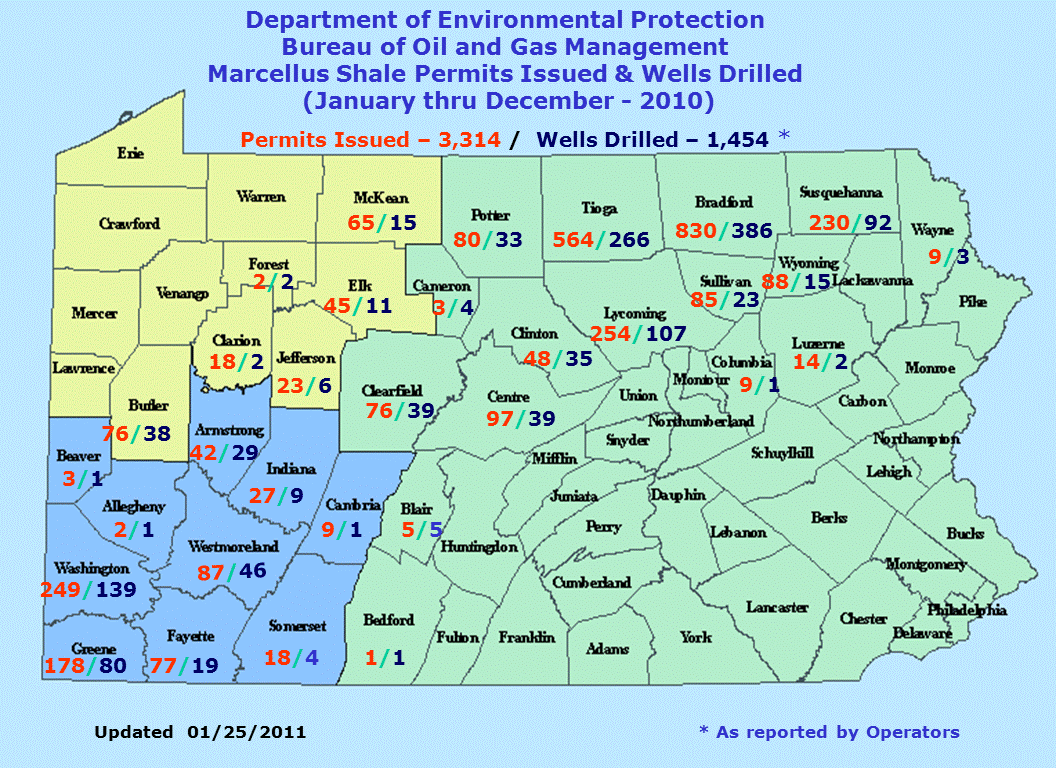
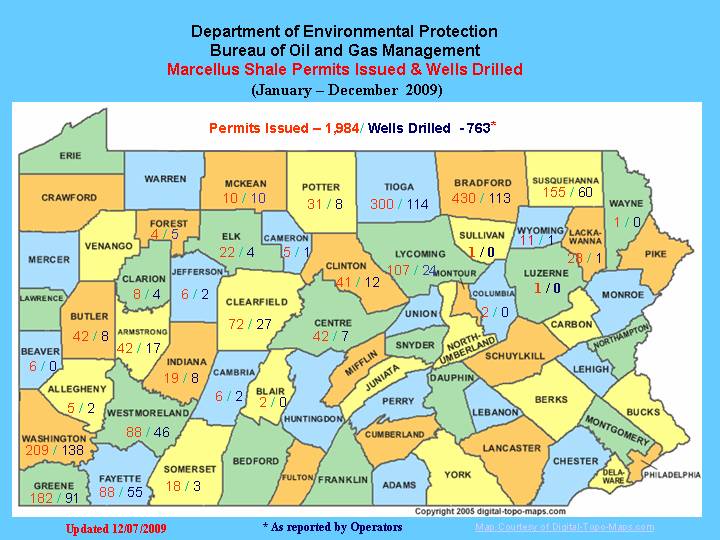
In the first 10 months of 2011, there were 1,600 new Marcellus Shale wells drilled and a total of 2,882 new permits issued. In all of 2010 there were 1,386 Marcellus wells drilled and 3,314 permits issued and in 2009 there were 763 wells drilled and 1,984 permits issued.
The question is, can our water supplies and streams really go another year without these protections and in the face of increasing Marcellus Shale drilling activity?
We should have the answer shortly.

Thursday NewsClips

Community Rallies After Judge Denies Water To Dimock
Dimock Residents Ask: What Will We Do For Water
Op-Ed: In Defense Of The Much-Maligned Drilling Fee
A Debate Over Who Regulates Gas Fracking In PA
DEP Secretary Talks About EPA Regs For Oil And Gas
CBF: Drilling Sites Polluting Air
Landowner Gas Leasing Says Jobs Are Key Element
Natural Gas Users See Lower Bills Thanks To Marcellus Shale
UGI Lowers Natural Gas Rate
Oil & Gas Well Brine Use On Wintry Roads Considered
Groundwater Controversy Follows Fracking To Ohio
Another Delay For New York Fracking Regulations
Pipelines, Plants Spread Wealth Beyond Marcellus Shale Drilling
Tropical Storm Lee Cleanup Means Tax Increases
SE Household Hazardous Waste Recycling Program Recognized
Heinz Gives Allegheny County $1M To Retrofit Diesel Engines
Another Wind Farm Under Construction In Somerset County
Conoy Soybean Plant On Road To Realization In Lancaster
Outdoors: 10 Years Into Deer Management Effort
Click Here for PA Capitol Digest

Subscribe To Receive Updates:

Enter your email address:

Delivered by FeedBurner